Deal Alert Setup to Never Miss a Drop
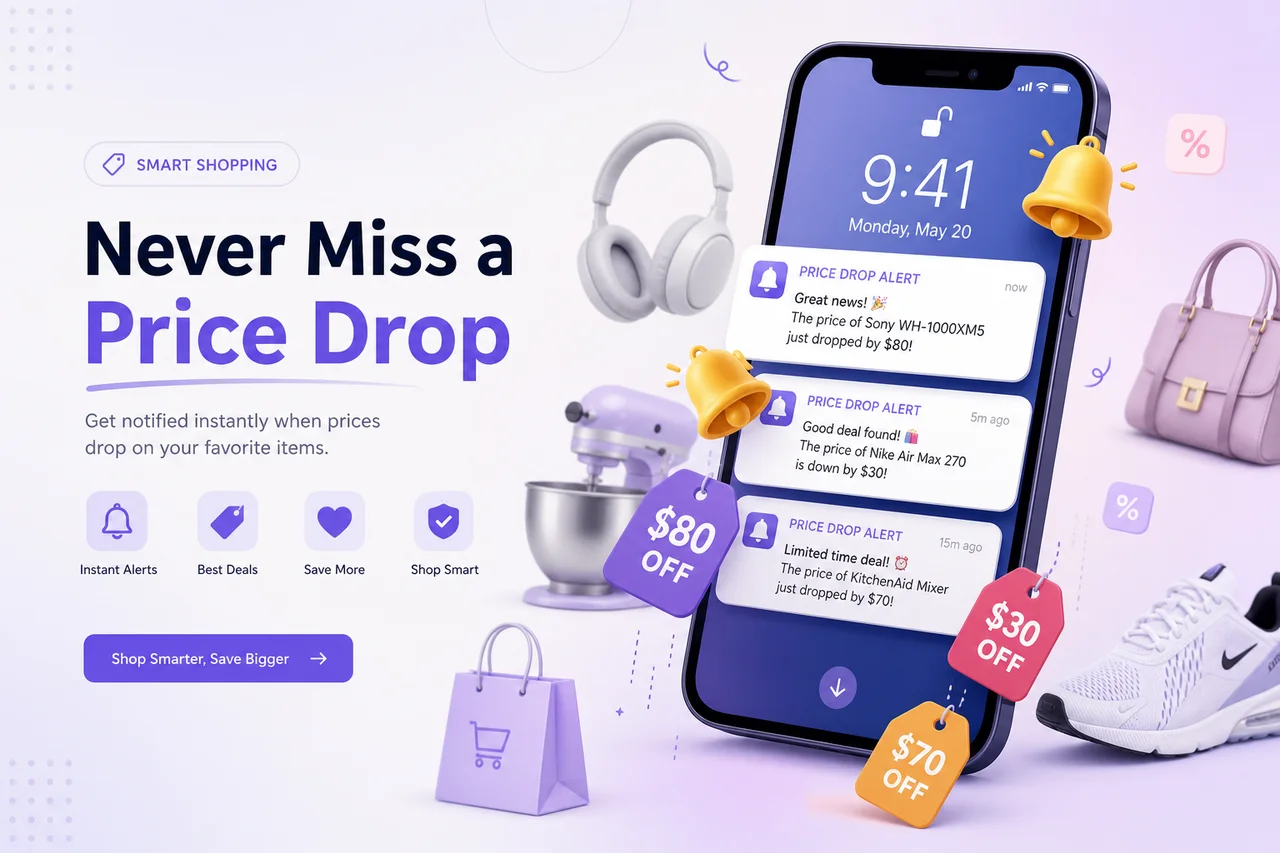
Set up deal alerts that notify you instantly when prices drop on items you want. Email, app, and browser alert methods compared.
Anúncios
A proper deal alert setup replaces the daily habit of checking deal sites with automatic notifications that arrive only when something you actually want drops to a price you're willing to pay. Set it once, and deals come to you instead of you hunting for them.
What Types of Deal Alerts Can You Set Up?
Price drop alerts trigger when a specific product falls below your target price. Deal aggregator alerts notify you when any deal matching your search criteria gets posted. Store alerts push promotional announcements directly from retailers you follow.
Anúncios
Each type serves a different purpose. Price drop alerts work best for specific items you're tracking. Aggregator alerts catch deals you didn't know about. Store alerts keep you informed about sitewide sales at your favorite shops.
How Do You Set Up Price Drop Alerts?
CamelCamelCamel lets you set a target price on any Amazon product. When the price hits your number, you get an email. Google Shopping tracks items across multiple retailers and sends alerts when any seller drops their price below your threshold.
Anúncios
Honey's Droplist feature tracks items from your wishlist and alerts you through the browser extension and email when prices change. The setup takes under a minute per item — paste the URL, set your target price, and let the tool do the monitoring.
Which Deal Aggregator Alerts Are Worth Enabling?
Slickdeals Deal Alerts match your keyword criteria against every deal posted by the community. Set alerts for product names, brands, or categories and receive push notifications when matching deals get enough upvotes to confirm they're genuine.
DealNews sends curated daily emails with hand-picked deals across electronics, clothing, and home goods. Their editorial team verifies each featured deal, reducing the noise compared to community-driven platforms where quality varies.
Should You Use Email or Push Notifications for Deals?
Push notifications deliver deals faster, which matters for flash sales and limited-quantity offers that sell out within hours. Email alerts are better for non-urgent price tracking where a few hours of delay doesn't affect availability.
Enable push notifications for time-sensitive deal aggregator alerts and email for price tracking alerts. This split keeps your phone notification tray manageable while ensuring you don't miss flash deals that expire quickly.
How Many Deal Alerts Is Too Many?
More than 10-15 active item alerts and 3-5 keyword alerts creates notification fatigue where you start ignoring all alerts, including genuinely great deals. Keep your alert list tight and review it monthly to remove items you no longer want.
Quality over quantity applies to deal alerts. Five well-targeted alerts for specific items you plan to buy outperform fifty vague keyword alerts that flood your inbox with marginally relevant deals you'll never act on.
Can You Set Alerts for Specific Stores?
Most retailers offer email or app-based deal notifications. Target, Best Buy, Amazon, and Walmart all send personalized sale alerts through their apps. Enabling notifications from your top three stores ensures you catch their major promotional events.
Following stores on Twitter or Instagram provides deal announcements faster than email in many cases. Social media posts appear in real-time while email campaigns may be queued for scheduled delivery hours later.
What Tools Track Deals Across Multiple Retailers?
Google Shopping alerts monitor the same product across all retailers simultaneously and notify you when any seller drops their price. ShopSavvy tracks products by barcode across online and local stores for comprehensive price monitoring.
Keepa provides the most detailed tracking for Amazon with international marketplace coverage. For cross-retailer tracking, combining Google Shopping with one Amazon-specific tool covers the widest range of products and sellers.
How Do You Set Realistic Target Prices?
Check the historical low price on CamelCamelCamel or Google Shopping and set your target 5-10% above that floor. Setting the exact historical low means your alert may never trigger because that price point was a one-time anomaly.
For products without price history, set your target at 20% below the current retail price. Most products see 20% discounts during seasonal sales, making this a realistic threshold that triggers within a few months of setting the alert.
Do Deal Alerts Work for International Shopping?
Keepa tracks Amazon prices across US, UK, Germany, Japan, and other international marketplaces. Google Shopping covers retailers in most countries. For international deal aggregators, HotUKDeals covers UK deals while MyDealz serves Germany and Europe.
Cross-border shopping adds shipping costs and potential customs fees that can negate price advantages. Factor total delivered cost into your alert thresholds rather than just the product price when tracking international deals.
What to Do When a Deal Alert Triggers
Act quickly on time-sensitive alerts. Flash sale and Lightning Deal alerts require purchasing within minutes to hours. Price drop alerts give you more time because the new price typically lasts days or weeks unless it was a pricing error.
Verify the deal by checking the price history to confirm it's genuinely low. Read recent reviews to make sure the product hasn't developed quality issues since you added it to your watchlist. Then buy confidently knowing you waited for the right price.
Building Your Deal Alert Dashboard
Use CamelCamelCamel for Amazon items, Google Shopping for everything else, and Slickdeals for keyword-based discovery. Keep a simple spreadsheet logging each alert, target price, and current status. Review and prune the list monthly to keep it focused.
Dedicate a browser bookmark folder to your active alert dashboards. Checking all alerts takes two minutes when your tools are organized in one place versus five minutes of navigating to each tool individually.
- Make a list of 5-10 specific items you plan to buy this quarter
- Check historical low prices on CamelCamelCamel or Google Shopping
- Set target prices at 5-10% above the historical low
- Configure alerts using CamelCamelCamel, Google Shopping, or Honey
- Set up Slickdeals keyword alerts for product categories you browse
- Enable push notifications for time-sensitive deals, email for price tracking
- Review and prune your alert list at the start of each month